The Safe Bet Trap: Why Backing Favourites Is Quietly Draining Aussie Punters Dry
There's a particular kind of confidence that comes with backing the favourite. You're not some mug chasing a long shot. You've done the reading, you've looked at the ladder, you know this team is better. It feels responsible, almost sensible — like choosing the chicken salad over the parma.
But here's the problem: the chicken salad at a betting agency is often overpriced, undersized, and quietly terrible for your bankroll.
Favourite-backing is one of the most common and least-discussed ways Aussie punters bleed money. Not dramatically, not in one catastrophic swing — but steadily, week after week, like a slow leak in a tyre you don't notice until you're already on the side of the road.
How Public Money Warps the Market
Betting markets don't just reflect probability. They reflect opinion — specifically, the collective opinion of everyone placing a bet, weighted by how much money they're putting down.
When a massive chunk of the betting public piles onto one team, the bookmaker responds by shortening the odds to balance their liability. That's just business. The result? A favourite whose true win probability might be, say, 55% ends up priced at odds that imply a 65% or 70% chance of winning.
In plain English: you're being paid as though the favourite is more likely to win than they actually are. The market has overcorrected, and you're on the wrong side of that correction.
This is what punters in the industry call odds compression — and it's most brutal on the heavily-backed end of the market.
The underdog, meanwhile, gets far less attention. Public money drifts away from them, the bookmaker has less liability to manage, and the odds stay long — sometimes longer than the actual probability of them winning would justify. That's where the value quietly sits, ignored by the majority of recreational punters who'd rather feel safe than be right.
The AFL Problem
Let's get specific. During a typical AFL regular season, look at any game featuring a top-four side playing a bottom-eight team at home. The favourite will attract enormous public money — often 70% or more of all bets placed on the match.
The odds compress accordingly. What might have been a fair price of $1.55 drifts in to $1.35 or $1.30. The underdog, sitting at $3.20 on a fair market, might be available at $3.50 or even $3.80.
Now run the maths over a full season of backing those compressed favourites. Even if the favourite wins at the rate the public expects — which they often don't, because upsets happen more than casual punters believe — the return on investment is deeply negative. You're paying a premium for a feeling of certainty that the market has already priced out of existence.
Seasoned AFL punters know this. They're not backing Richmond at $1.28 on a Friday night. They're looking at the Gold Coast away at the Gabba, getting $3.60, and asking whether that number reflects reality.
NRL and the Line Market Trap
In rugby league, the favourite problem shows up in a slightly different way — through the handicap line.
A team might be installed as a -12.5 favourite. Public money floods in. The line moves to -14.5. Now you need them to win by 15 points just to cash your ticket. That's not a safety net; that's a trap dressed up as a sure thing.
Sharp NRL punters often target what's called line value — finding games where the public has pushed the handicap beyond what the underlying form actually supports. A team might genuinely be the better side and still be a terrible bet at the inflated line the market has drifted to by kickoff.
This is especially common in State of Origin markets, where the emotional investment from both sides of the Barassi Line sends money flooding in based on loyalty rather than analysis. The result is almost always a distorted market — and almost always an opportunity for the punter willing to go against the grain.
Horse Racing: Where the Phantom Favourite Lives Loudest
If there's one market where the favourite illusion reaches peak intensity, it's horse racing.
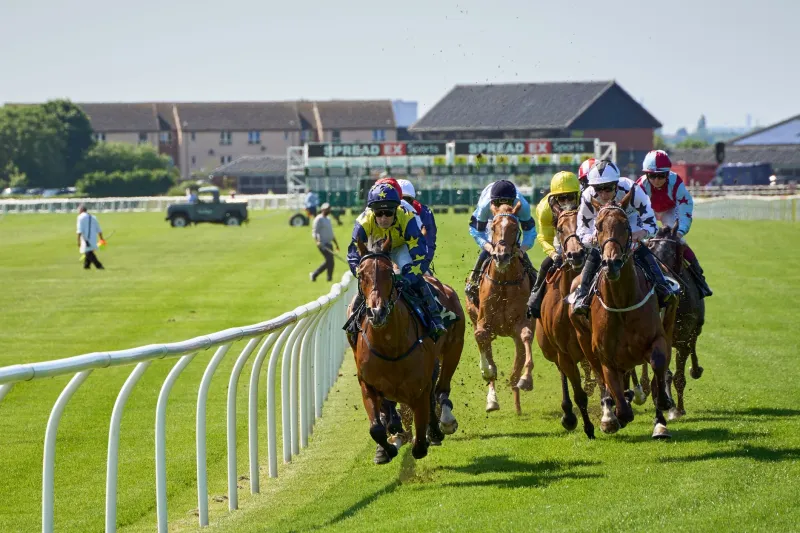
The favourite in any given race wins roughly 30–33% of the time. That sounds reasonable until you factor in that most favourites are priced at odds implying a 40–50% win probability. The market, flooded with public money on the well-known name or the horse that finished second last start, consistently overestimates the favourite's chances.
Professional racing punters have known this for decades. There's an entire cottage industry built around overlay betting — identifying horses whose true probability of winning exceeds what the market price implies. And more often than not, those overlays are sitting in the mid-field of the market: not the $1.90 favourite, not the $25 roughie, but the $6 or $8 runner that the public has mostly ignored.
The Spring Carnival is a perfect case study. The big-name horses attract enormous media attention and public money. Lesser-known imports or horses without the headline trainer get overlooked. Every single year, races at Flemington and Caulfield throw up winners at $10, $14, $20 — horses who weren't longshots by probability, just by neglect.
What the Sharp Money Actually Does
Professional punters — the ones treating this as a business rather than a weekend hobby — operate almost entirely on the concept of expected value. They're not asking "who's going to win?" They're asking "is the price on this outcome better than the true probability justifies?"
That question almost never leads them to the favourite.
It leads them to underdogs with genuine upset potential that the public has dismissed. It leads them to handicap lines that have been pushed too far by recreational volume. It leads them to horses sitting at $7 in a field where the favourite is overbet at $2.20.
The contrarian play isn't about being different for the sake of it. It's about recognising that the market is a reflection of public sentiment, and public sentiment is almost always overconfident about the favourite.
Breaking the Habit
None of this means you should back every underdog or avoid favourites entirely. That's just contrarianism for its own sake, which is equally brainless.
What it means is this: before you back the favourite, ask yourself whether the price actually reflects the probability — or whether it reflects the fact that everyone else is backing them too.
Check the line movement. If a team opened at $1.60 and is now $1.35, public money has compressed that market. The value has been eaten. You're not getting a deal; you're getting the leftovers.
Look at the underdog price instead. Has it drifted out because money has moved away from them, or because something has genuinely changed? Sometimes the $3.80 side is $3.80 for a reason. But sometimes they're $3.80 because 80% of the public decided the other team was unbeatable — and that's a very different thing.
The phantom favourite feels safe. It feels logical. It feels like the smart play.
But in a market engineered around public money, safe is often the most expensive thing you can buy.