Built to Beat You: The Hidden Architecture of How Betting Markets Are Engineered Against Aussie Punters

There's a reason sportsbooks in Australia are profitable year after year, regardless of which teams win, which horses get up, or whether an underdog storms home at the MCG. It's not luck, and it's not because operators are particularly gifted at predicting outcomes. It's because the entire infrastructure of a betting market is designed — from the ground up — to guarantee a return for the house over time.
Understanding how that machinery works doesn't mean you'll suddenly start beating the book. But it does mean you'll stop walking into traps blind.
What the Odds Are Actually Telling You
When you see a market on the AFL or the NRL, the odds displayed aren't a neutral reflection of what the bookmaker thinks will happen. They're a commercial product. Every price on the board has been calculated to include a margin — often called the overround or the vig — that ensures the operator collects more than they pay out across the full range of outcomes.
Here's a simple way to see it in action. In a two-outcome market — say, a head-to-head between two teams — true odds on a perfectly balanced contest would each be $2.00. If both sides had an equal chance of winning, both would sit at evens. But look at almost any Australian sportsbook and you'll find prices closer to $1.90 on each side. That gap isn't rounding. It's the margin.
Convert those prices into implied probabilities and you'll find the two outcomes add up to more than 100 per cent — often 105 to 110 per cent across popular markets. That excess is what the operator keeps, on average, for every dollar wagered across the market. The bigger the book, the more that percentage compounds into serious revenue.
Where the Margin Hides in Plain Sight
The tricky part is that margins aren't distributed evenly across a market. Operators apply heavier margins to outcomes they know casual punters gravitate toward — and lighter margins to the selections that attract less action.
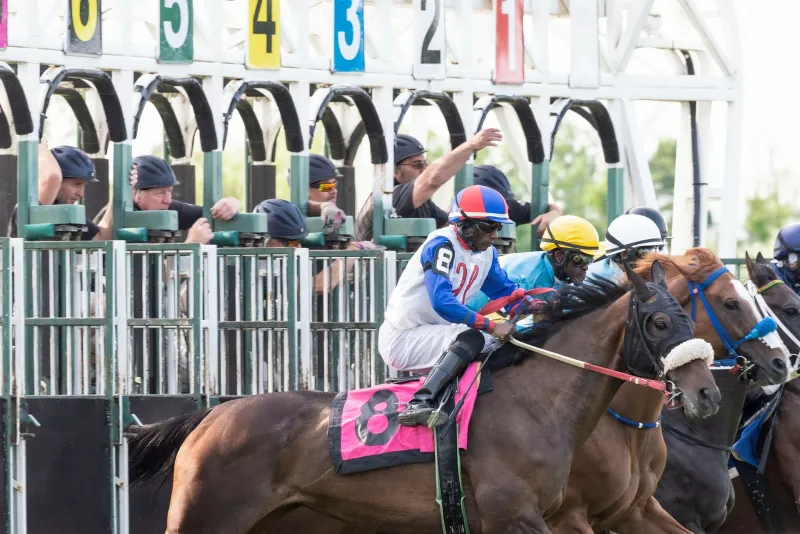
Favourites in Australian horse racing are a classic example. The big names, the horses that dominate conversation at the office and on social media, consistently carry tighter apparent value than their outsider counterparts. That's not because the bookmaker is being generous. It's because heavy public betting on the favourite allows the operator to shade the price and still attract volume.
The same dynamic plays out in rugby league, AFL, and cricket markets. When a popular team is playing, the public floods in on one side. The operator doesn't need to offer genuine value — demand does the work for them. Meanwhile, the less glamorous side of the market might carry slightly better odds, but fewer punters ever look that direction.
How Lines Move — And Who's Moving Them
Betting lines aren't static. They shift constantly in response to the money coming through the door, and understanding why they move tells you a lot about how operators manage their exposure.
When a large volume of bets lands on one outcome, the operator faces increased liability. To rebalance, they'll shorten the price on that selection and lengthen the other side, nudging punters toward the less-backed option. This process — called line movement — is a risk management tool, not a reflection of new information about the event itself.
There's a second type of movement, though, and it's more significant. When sharp bettors — professionals with genuine analytical edge — place large wagers, most Australian operators take notice fast. A sharp bet on an AFL line, for example, can trigger a price shift within minutes. The book isn't just rebalancing; it's treating the sharp money as information and adjusting accordingly.
For recreational punters, this creates a subtle but important problem. By the time most Australians open their app on a Saturday morning, the lines have already been shaped by professional betting activity from earlier in the week. The casual punter is often betting into a market that's already been squeezed by people who do this for a living.
The Limits Model and Why Some Punters Get Restricted
If you've ever had your bet knocked back or your account limited after a run of wins, you've experienced the other side of market architecture firsthand. Operators don't just build markets to extract value — they actively monitor who's taking value away.
Australian sportsbooks use sophisticated account profiling to identify punters who consistently bet into mispriced lines or who show patterns associated with sharp behaviour. Once flagged, those accounts often face reduced limits or restricted access to certain markets. It's a largely unregulated practice in Australia, and it's one of the more controversial aspects of the local industry.
The irony is that recreational punters — the ones who lose the most over time — face no such restrictions. The system is calibrated to protect revenue from those who might threaten it, while keeping the door wide open for the customers who contribute most to the bottom line.
Exotic Markets and the Margin Explosion
If the margin on a standard head-to-head sits around five per cent, what do you think happens when you start building exotic bets — player props, first goalscorer markets, quarter-by-quarter lines?
The margins compound. A market with eight or ten possible outcomes carries a far higher overround than a two-way line. Each individual price might look reasonable in isolation, but when you add the implied probabilities together, you're often looking at an operator margin of fifteen, twenty, or even twenty-five per cent on some exotic offerings.
These markets are heavily promoted in Australia, partly because they're entertaining and partly because they're enormously profitable. The punter who dabbles in first-try scorer bets every Friday night is operating in one of the highest-margin environments on the entire platform.
What You Can Actually Do With This Information
None of this means you should stop betting — but it does mean you should bet smarter. A few practical takeaways:
Shop around. Australia has multiple licensed operators, and price comparison across platforms is one of the few genuine edges available to recreational punters. A difference of $2.00 versus $2.10 on a regular bet adds up significantly over a season.
Avoid markets with inflated margins. The more outcomes a market has, the more margin is buried in it. Exotic markets and novelty bets are entertaining, but they're also where your money disappears fastest.
Treat line movement as information. If a price shifts sharply before an event, ask why. It may reflect sharp money or significant news — either way, it's worth knowing before you commit.
Set a budget and stick to it. The mathematical disadvantage built into every market is a long-run certainty. The best way to stay in the game and enjoy it is to treat betting as entertainment with a defined cost, not a revenue stream.
The book was always going to have the edge. That's not a scandal — it's just the business model. But knowing how that model works puts you in a far better position than the punter who assumes the odds on the screen are somehow fair by default.