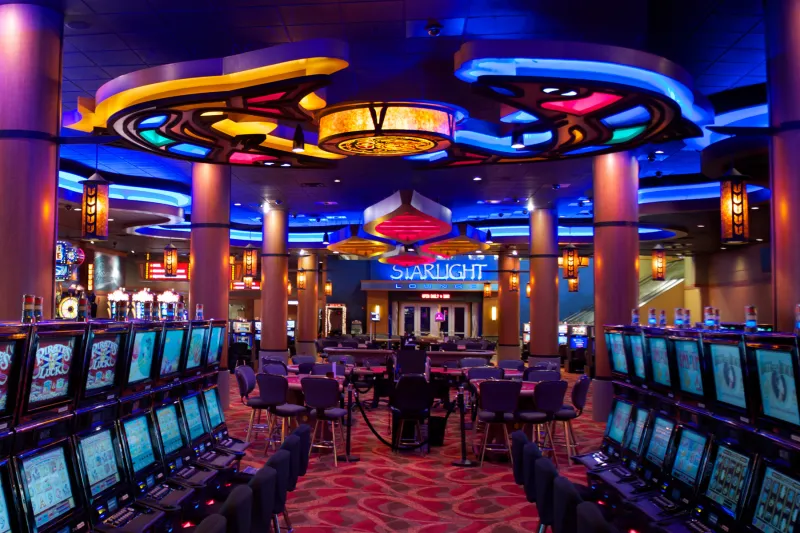
Cash Out or Hold On? The Hidden Cost of Punting's Most Tempting Button

Photo: Bhullargraphic, CC BY-SA 4.0, via Wikimedia Commons
It's the third quarter. Your multi is sitting at four from four legs. One team is up by twelve points, the other is cruising, and all you need is for your last pick to hold on. Then the notification pops up: Cash Out Available — $340.
You placed $50. You could walk away with $340 right now. Or you could wait and collect $620 if the final leg lands.
What do you do?
If you're like most Australian punters, you take the $340. And the platform is counting on exactly that.
The Feature That Feels Like a Gift
Early cash-out has become one of the most widely used tools in Australian online betting. Platforms have rolled it out across sports betting and, increasingly, in casino environments through features like mid-game buy-outs on live tables. The pitch is always the same: control, flexibility, peace of mind. Take your profit now rather than risk losing it all.
It sounds like the platform is doing you a favour. In reality, it's one of the most elegantly designed margin-capture tools in the industry.
Here's the fundamental thing to understand: when a platform offers you a cash-out price, that price is not calculated to reflect fair value. It's calculated to ensure the platform retains a margin — typically larger than the margin built into the original bet. You are, in almost every scenario, being offered less than your bet is mathematically worth at that moment in time.
Breaking Down the Maths
Let's use a simple example. You've backed a team to win at $3.00 odds with a $100 bet. Potential return: $300. At half-time, your team is ahead, and the platform offers you a cash-out of $190.
What's the fair value of that bet at half-time? If the market now has your team as $1.60 favourites to win, the fair cash-out value would be approximately $100 ÷ $1.60 × $3.00 = $187.50. But wait — that's actually less than the offer in this case.
Except the platform's $1.60 already includes their margin. Strip that out, and the true probability might be priced closer to $1.50, making the fair value of your position closer to $200. The $190 offer is still a haircut.
This isn't a massive difference on a single bet. But across hundreds of cash-out decisions over a year of punting? The cumulative drain is significant. Research from UK and European gambling markets — where cash-out data is more publicly available — consistently shows that bettors who frequently use early cash-out underperform their expected returns by meaningful margins compared to those who let bets run.
Why We Can't Stop Hitting the Button
Understanding the maths doesn't make the button easier to resist. That's because the impulse to cash out isn't rational — it's emotional, and it's driven by some very well-documented psychological patterns.
Loss aversion is the big one. Behavioural economists have shown repeatedly that the pain of losing feels roughly twice as powerful as the pleasure of an equivalent win. When you're sitting on a profit, the prospect of watching it disappear triggers genuine anxiety — and cash-out offers arrive precisely at the moment that anxiety peaks.
The near-miss effect compounds this. When you're one leg away from a big multi payout, the cognitive weight of that almost-win is enormous. It feels closer and more real than it actually is, which makes the fear of losing it feel proportionally more intense.
Platforms aren't unaware of this. Cash-out notifications are timed and designed to appear when emotional pressure is highest — when leads are tight, when games are in the balance, when the final leg is just starting. The interface is built around the psychology, not despite it.
The Casino Side of the Equation
In casino gaming, the equivalent dynamic shows up differently but operates on the same principle. Features like early buy-outs on game show-style titles, or the option to collect a guaranteed prize rather than play on in bonus rounds, present players with a version of the same choice: guaranteed now versus uncertain later.
The house edge on these decisions is often steeper than in sports betting, because casino players have even less information available to make a rational assessment. At least in sports betting you can look at the current score, the form, the conditions. In a casino bonus round, you're essentially guessing — and the platform's guaranteed offer is calibrated to exploit exactly that uncertainty.
When Does Cashing Out Actually Make Sense?
It's not a blanket never. There are scenarios where taking the cash-out is genuinely the right call — but they're more specific than most punters realise.
When a key variable has changed dramatically. If your last multi leg involves a team whose star player has just gone off injured, the market has shifted in a way your original bet didn't account for. The cash-out offer might now reflect a closer approximation of fair value given the new information.
When the cash-out value exceeds your calculated fair value. This is rare, but it happens — particularly in fast-moving in-play markets where the platform's pricing algorithm hasn't fully caught up with on-field events. If you can identify that gap, taking the offer is legitimate value extraction.
When bankroll management demands it. If your entire month's budget is riding on one final leg and the cash-out gets you back to even, the variance reduction might be worth the mathematical cost. Protecting your ability to keep betting is sometimes more important than optimising a single decision.
What's not a good reason: general nervousness, being up a decent amount and not wanting to lose it, or the feeling that the game is about to turn. Those are emotional signals, not strategic ones.
A Practical Framework
Before you hit cash out, run through three quick questions:
- Has something materially changed since I placed this bet? If the answer is no, the original logic still applies.
- Am I making this decision based on information, or based on anxiety? Be honest with yourself.
- What is the cash-out offer as a percentage of my potential return? If it's below 60%, you're almost certainly giving up significant value.
None of this means you should never use the feature. It means you should use it deliberately, with clear criteria, rather than reactively in the heat of the moment.
The button isn't going anywhere. Platforms will keep making it more visible, more tempting, and better timed. The only thing you can control is whether you reach for it on instinct or on purpose.